Shopify vs Hostinger: Which Is Better for Your Store 2026?
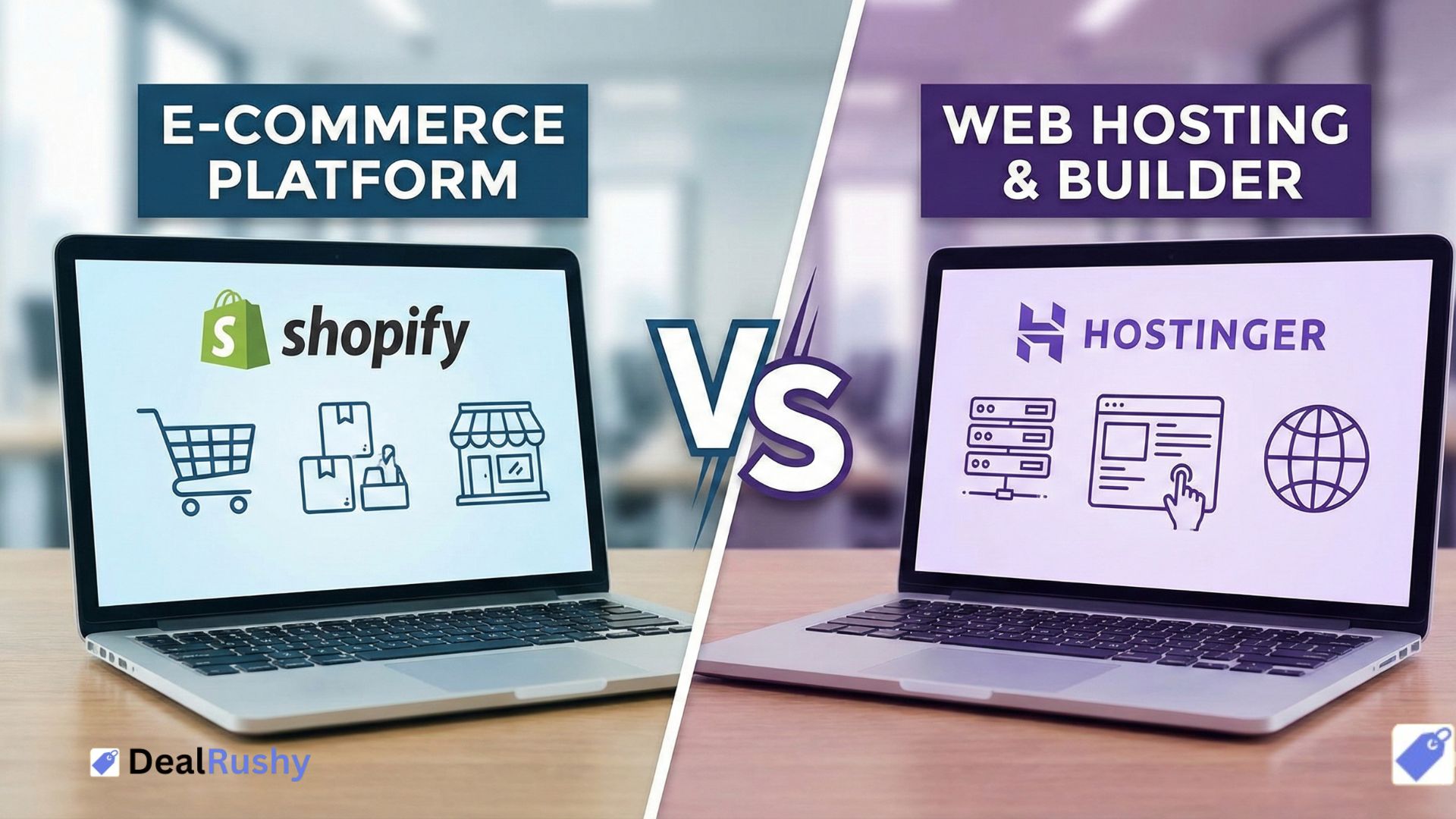
Shopify and Hostinger are two powerful website-building solutions, but they serve different needs. Shopify is a full ecommerce platform designed to help entrepreneurs build and scale online stores. Hostinger is an affordable hosting provider offering website-building tools for beginners and small businesses.
Introduction to Shopify
Shopify is one of the world’s most recognized ecommerce platforms. It is a fully hosted solution, meaning that everything needed to run an online store is included within the platform, including hosting, store design, payment integration, security, inventory management, and marketing tools.
Shopify is built for:
- Entrepreneurs and small businesses wanting a ready-to-use store
- Online brands focused on selling physical or digital products
- Companies needing a stable ecommerce system
- Users who do not want to handle technical tasks
- Anyone who wants to scale their online store quickly
Shopify’s strength lies in its ability to deliver an end-to-end ecommerce experience without requiring coding skills or technical management.
Introduction to Hostinger
Hostinger is a well-known hosting provider that offers affordable and beginner-friendly hosting plans. It is not an ecommerce platform by itself, but it allows users to install ecommerce applications such as:
- WordPress + WooCommerce
- OpenCart
- PrestaShop
- Magento
- Custom PHP stores
This makes Hostinger extremely flexible. Users can create any type of store using their preferred software while enjoying fast performance, low costs, and ease of use through its custom hPanel dashboard.
Hostinger is ideal for:
- Beginners or small businesses wanting budget-friendly hosting
- Users who want control over their website
- Those needing flexible software options
- Bloggers or small shops transitioning into ecommerce
Since Hostinger itself does not provide built-in ecommerce tools, users rely on the CMS they choose (mainly WooCommerce).
Shopify vs Hostinger: In-Depth Comparison
Below is a complete examination of both platforms across major ecommerce and hosting categories.
1. Ease of Use
Shopify
Shopify is famous for its beginner-friendly interface. You do not need to worry about installations, servers, or technical operations. Everything is pre-built, optimized, and ready to use.
Features include:
- Drag-and-drop store builder
- Easy product management
- Integrated checkout
- Ready-to-use payment gateways
- Built-in shipping and tax settings
Shopify allows even non-technical users to launch a store within a few hours.
Hostinger
Hostinger is simple to use, but setting up an online store requires more steps. Users must:
- Install WordPress
- Add WooCommerce or another ecommerce plugin
- Configure hosting settings
- Add security configurations
- Set up payment gateways manually
While Hostinger guides users with tutorials and hPanel features, it is not an all-in-one ecommerce platform like Shopify.
Winner: Shopify
Shopify is hands-down easier for building and managing an online store.
2. Ecommerce Features
Shopify
Shopify is built exclusively for ecommerce, so it offers:
- Unlimited product listings
- Inventory management
- Abandoned cart recovery
- Built-in payment gateways
- Discount codes and gift cards
- Multi-channel selling (Facebook, Instagram, Amazon)
- Dedicated ecommerce themes
- Integrated shipping and order tracking
- Shopify apps extend functionality even further.
Hostinger
Hostinger itself does not include ecommerce features. Your online store features depend entirely on the CMS you select.
For example:
- WooCommerce (WordPress) gives product listings, coupons, checkout, and shipping tools
- PrestaShop and Magento offer advanced ecommerce
- OpenCart supports multiple stores
However, each platform requires manual setup and configuration.
Winner: Shopify
Because Shopify is an ecommerce platform, it has far more built-in store features.
3. Performance and Speed
Shopify
Shopify’s performance is consistent because:
- Hosting is fully managed
- Servers are optimized for ecommerce
- CDN is included
- Caching is automated
All stores run on Shopify’s cloud infrastructure.
Hostinger
Hostinger provides strong performance using:
- LiteSpeed web servers
- SSD storage
- Optimized caching tools
- Global data centers
WooCommerce sites can perform extremely well on Hostinger, but optimization requires technical setup.
Winner: Hostinger (Slightly)
Hostinger often delivers faster raw server performance, especially for WooCommerce, but optimization depends on the user. Shopify is consistent but less customizable.
4. Design and Themes
Shopify
Shopify offers:
- Premium-quality ecommerce themes
- Free and paid templates
- Drag-and-drop customization
- Mobile-responsive designs
Themes are visually appealing and optimized for conversions.
Hostinger
Hostinger’s designs depend on the platform:
- WordPress has thousands of themes
- WooCommerce themes are abundant
- PrestaShop and OpenCart provide their own designs
This provides more flexibility, but quality varies across themes.
Winner: Tie
Shopify offers polished ecommerce themes; Hostinger offers more variety.
5. Pricing Structure
Shopify Pricing
Shopify has fixed monthly fees, which include:
- Hosting
- SSL
- Security
- Ecommerce tools
However, Shopify charges transaction fees unless you use Shopify Payments. Apps can also increase costs.
Hostinger Pricing
Hostinger is significantly more affordable:
- Very low hosting costs
- Free domain on some plans
- Free SSL
- Email hosting
- Low WooCommerce setup costs
However, users pay separately for themes, plugins, and addons.
Winner: Hostinger
Hostinger is far more affordable.
6. Payment Gateways
Shopify
Shopify offers numerous gateways:
- Shopify Payments
- Stripe
- PayPal
- Razorpay
- PayU
- 100+ other gateways
However, Shopify adds transaction fees for non-Shopify Payments.
Hostinger
Payment gateway availability depends on the platform you install. WooCommerce supports:
- Stripe
- PayPal
- Razorpay
- Amazon Pay
- Bank transfers
There are no extra gateway transaction fees except merchant charges.
Winner: Hostinger
More payment flexibility without extra Shopify transaction fees.
7. Security
Shopify
Shopify provides built-in high-grade security:
- PCI-DSS compliance
- SSL included
- DDoS protection
- Server-level firewalls
- Automated updates
This makes Shopify ideal for ecommerce beginners.
Hostinger
Hostinger offers:
- Free SSL
- Malware scanning
- LiteSpeed security layers
- Cloudflare integration
- Weekly and daily backups
However, users must manage CMS updates, plugin security, and ecommerce compliance manually.
Winner: Shopify
Complete built-in ecommerce security.
8. Scalability
Shopify
Shopify is extremely scalable:
- Handles high traffic
- No need to upgrade servers
- Shopify Plus available for enterprise stores
Users never have to worry about performance tuning.
Hostinger
Hostinger allows scaling via:
- VPS hosting
- Cloud hosting
- Upgrading WordPress hosting plans
However, scaling an ecommerce CMS requires technical adjustments and optimization.
Winner: Shopify
Designed for effortless scaling.
Comparison Table: Shopify vs Hostinger
Who Should Choose Shopify?
Shopify is best for:
- Businesses that want a ready-made ecommerce platform
- Users who want zero technical work
- Growing brands needing reliable checkout and inventory systems
- Entrepreneurs who want to scale quickly
- Those who prefer built-in ecommerce tools
If your main goal is to sell products online with minimum effort, Shopify is ideal.
Launch Your Online Store with Shopify
Build a professional, scalable online store with Shopify’s powerful ecommerce tools. From sleek themes to secure checkout, inventory management, and integrated payments, Shopify gives you everything you need to start, grow, and manage your business with ease.
Try FreeWho Should Choose Hostinger?
Hostinger is best for:
- Beginners wanting affordable hosting
- Users wanting to build a WooCommerce store
- Small shops with tight budgets
- Developers who want full control
- Businesses wanting flexibility in store design
Hostinger is perfect for affordable ecommerce hosting and for users comfortable managing their own platforms.
Create Your Website Affordably with Hostinger
Hostinger offers fast, reliable, and beginner-friendly hosting plans perfect for websites, blogs, and small online stores. Enjoy free SSL, one-click installs, a custom control panel, and excellent performance at a low cost.
Get 95% Off TodayConclusion
Shopify and Hostinger both offer excellent solutions for building websites and online stores, but they serve different purposes.
Choose Shopify if you want a complete, fully managed ecommerce system that works out of the box with little to no technical effort. It is the better choice for growing businesses, serious online stores, and users who want built-in features.
Choose Hostinger if you want a low-cost, flexible hosting provider where you can build a WooCommerce store or any other CMS-based ecommerce platform. It is ideal for beginners, bloggers turning into sellers, or small businesses on a budget.
Frequently Asked Questions
Verified Expert in deals and money-saving tips
No comments yet. Be the first to share your thoughts!